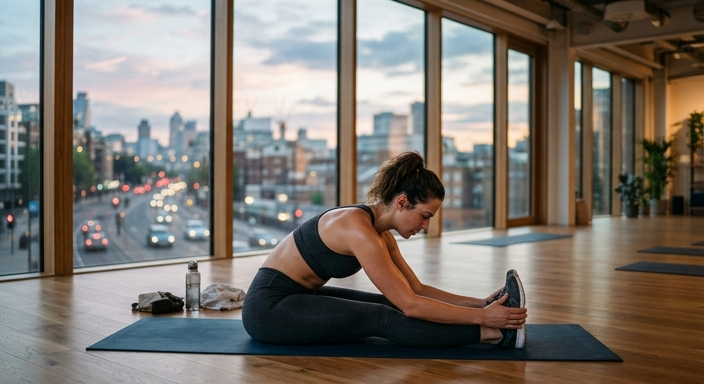
Stretching is the one training block everyone agrees they should do more of, and the one most people skip. The reason is rarely motivation — it is structure. A stretch that feels like 45 seconds is usually 15. A mobility flow without a clock drifts into a casual float.
BeepBop's stretching presets give every hold a shape. Haptics tell you when to switch sides, when to release, and when to move on. The session ends when the timer says so, not when you get bored.
What BeepBop brings to stretching
Different goals need different timing. A pre-workout warm-up is short, dynamic, and brisk. A cooldown leans on longer static holds. Foam rolling wants 30-60 second beats per muscle. PNF stretching needs precise contract-relax cycles. Each of those is a different preset.
- Dynamic warm-ups — 30-60 second movement blocks to prime the joints before training.
- Static cooldowns — 45-90 second holds, left and right cued by beeps.
- Foam rolling sessions — timed circuits that cover the full body in 10-15 minutes.
- PNF and contract-relax — structured intervals for deeper range gains.
When to stretch
Before training
Keep it dynamic. Leg swings, hip circles, scapular slides, ankle rocks. The goal is to raise tissue temperature and rehearse the ranges you are about to load. Static stretching here can quietly reduce power output — save the long holds for afterwards.
After training
This is where static holds belong. Hamstrings, hip flexors, thoracic spine, shoulders. Two to three minutes per area is plenty. Breathe into the hold, release on the exhale.
On rest days
A dedicated mobility session is its own training block. Twenty to thirty minutes of flow work, foam rolling, and targeted stretches does more for recovery than adding another easy run or lifting session.
A sample cooldown
- Standing forward fold — 90s hold
- Lizard lunge — 60s each side
- Figure four / pigeon — 60s each side
- Puppy pose — 60s hold
- Thread the needle — 45s each side
- Child's pose — 60s hold
BeepBop plays through the sequence, beeps on every switch, and vibrates on your wrist so you can keep your eyes closed and actually breathe.
Start stretching with BeepBop
Every preset, every timer, every discipline — free to start. No account required.
Download Free